
3D Animation for Products and Complex Messages
Make functions, processes, and products visible
3D animation makes it possible to explain technical products, hidden features, and complex processes that are difficult or impossible to film. Zoom Film produces photorealistic 3D animation for applications such as sales, product launches, trade shows, education, and digital marketing.
We typically work from existing CAD files, technical drawings, images, and product data—and help translate that material into a clear visual narrative.
Here’s How You Can Use 3D Animation in Your Communications
Combine video footage and 3D animation
3D elements can be integrated into standard video footage to show what the camera cannot see. These might include internal mechanisms, material flows, holograms, or product components that need to be highlighted in a real-world setting.
Communicate across markets
A feature explained visually often requires less text and voice-over. This makes it easier to localize the animation into multiple languages and reuse it across countries, sales channels, and platforms.
From CAD Files to the Final Animation
First, we assess whether your existing CAD or 3D assets can be used directly. Then, we customize the models, materials, lighting, environment, and movements before rendering the animation and finalizing it with graphics, sound, and any voice-over.

Would you like to talk about 3D animation for your business?
Fill out the form and let’s talk about the possibilities.
Contact Zoom Film
Phone: 27 15 00 07
E-mail: info@zoom-film.dk

Benefits of 3D Animation for Products and Processes
A 100% controllable environment
In 3D, we control the background, camera angle, materials, and details. The product can therefore be displayed without distractions and within a visual universe that matches your brand.
Fewer prototypes and reworks
The animation can be developed before the physical product is finished and updated later if the design or features change. This can reduce the need for new footage.
A Consistent Visual Identity
Products can be presented in the same photorealistic style across videos, images, campaigns, and product variants.
Full control over lighting and the camera
Lighting, perspective, and motion can be precisely tailored to the function or detail that the target audience needs to understand.
The product does not have to be manufactured
Using CAD files, drawings, and product data, we can visualize a product while it is still in development or before its launch.
Show the inside of closed systems
3D animation can open up machines, track flows, and reveal hidden components that a camera cannot get close to.
Selected 3D Productions
Three handpicked examples of how we use 3D animation to showcase products, features, and technical processes. Click on a video to play it.

3D ANIMATION
A historical account of LINAK, brought to life through 3D animation, tracing its development from the initial ideas to an international company.

TECHNICAL ANIMATION
A technical process made concrete and easy to understand through a precise visual flow.
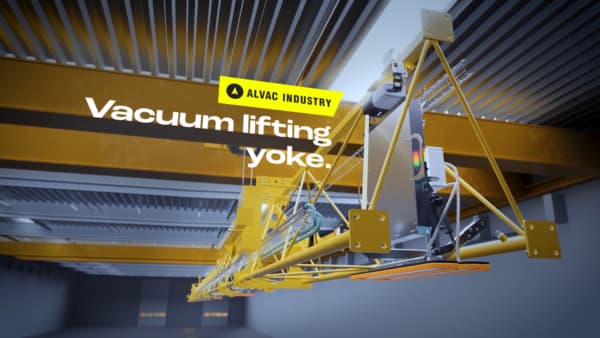
PHOTOREALISTIC 3D
Advanced lifting equipment made more visible and easier to understand with photorealistic 3D.
Take an in-depth look at selected case studies
Read about how we’ve used 3D animation to explain technical solutions and create compelling visual worlds for Alvac Industry, Dynatest, and Newtec Sorting.

3D PRODUCT VIDEO
Alvac Industry
Technical lifting equipment explained using photorealistic 3D animation.

VISUAL 3D UNIVERSE
Dynatest
A cohesive visual universe for technical products and international communication.

TECHNICAL ANIMATION
Newtec Sorting
Complex sorting functions made visible and understandable to customers.
Frequently Asked Questions About 3D Animation
Here you’ll find brief answers to the questions we’re most frequently asked about price, materials, applications, and production time.
How much does a 3D animation cost?
The price of a 3D animation depends, among other things, on the animation’s length, complexity, level of detail, and desired visual style. It also matters whether usable 3D models already exist or whether the product and its surroundings need to be built from scratch. After an initial discussion, we can provide a specific price estimate for your project.
When is 3D animation better than traditional film footage?
3D animation is particularly well-suited for situations where something is difficult, expensive, or impossible to film. Examples include internal mechanisms, closed systems, technical processes, abstract concepts, or products that have not yet been manufactured. Animation makes it possible to precisely control camera angles, lighting, surroundings, and details.
Can 3D animation be combined with regular film footage?
Yes, 3D animation can be combined with live-action footage so that real-life footage is supplemented with explanatory or visual elements. For example, it can be used to show what’s going on inside a product, highlight specific features, or add elements that can’t be captured on camera.
What materials do you need to create a 3D animation?
We typically start with images, sketches, technical drawings, product descriptions, and existing 3D or CAD files. In addition, we need to understand the animation’s target audience, message, and intended use. If you don’t have all the material ready, we’ll help you figure out what’s needed to move forward.
How long does it take to produce a 3D animation?
Production time depends on the scope of the project, the number of scenes, the level of detail, and the feedback process. A simple animation can be produced faster than a longer, photorealistic film featuring many products and environments. At the start of the project, we develop a realistic timeline with clear phases for storyboarding, production, feedback, and delivery.
The possibilities don’t end here
Effective communication is all about choosing the right format for the task. Take a look at our other solutions and see how we can help drive results for your business.
Do you have a product or process that needs to be explained?
Send us your materials or a brief description. We’ll then assess how 3D animation can best address the task.